Note
Access to this page requires authorization. You can try signing in or changing directories.
Access to this page requires authorization. You can try changing directories.
In a microservice-based application, you can use Distributed Application Runtime (Dapr) to streamline your app's interaction with external systems. The Dapr Bindings API makes it possible to work with external systems as inputs and outputs.
This tutorial uses a sample service application:
- The service listens to input-binding events from system
cronjobs. - The service uses a PostgreSQL output binding to insert data into a database.
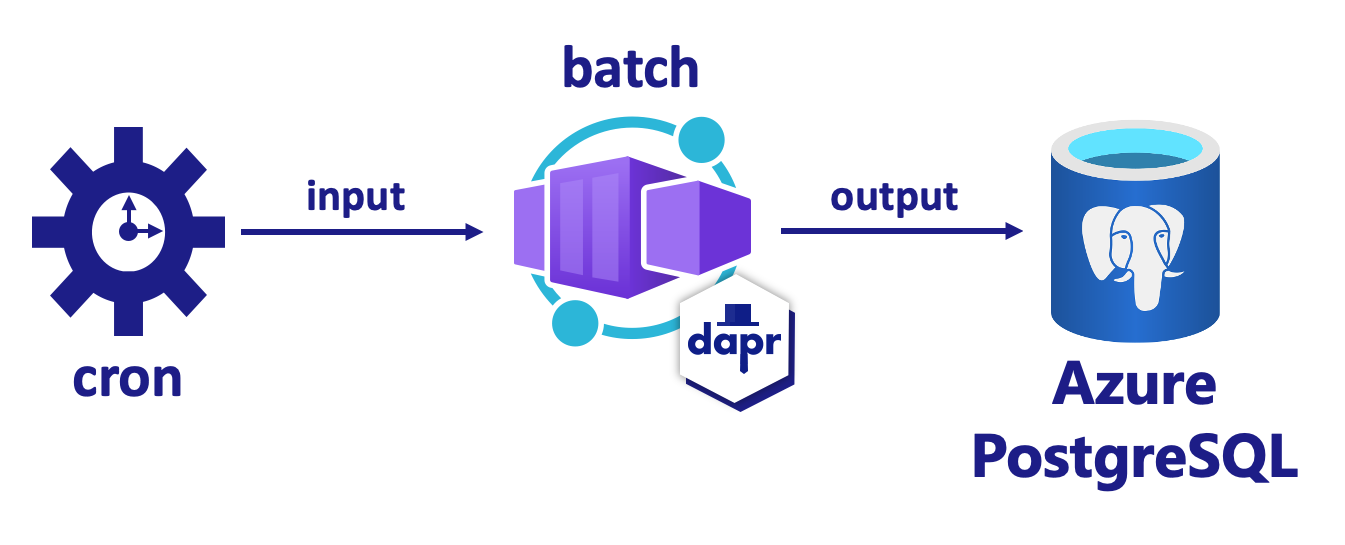
In this tutorial, you:
- Run the application locally with the Dapr CLI.
- Deploy the application to Azure Container Apps by using the Azure Developer CLI and Bicep files provided in the sample project.
Prerequisites
- The Azure Developer CLI
- The Dapr CLI, installed and initialized
- Docker Desktop
- Git
Run the Node.js application locally
Before you deploy the application to Container Apps, take the steps in the following sections to run the PostgreSQL container and JavaScript service locally with Docker Compose and Dapr.
Prepare the project
Clone the sample application to your local machine.
git clone https://github.com/Azure-Samples/bindings-dapr-nodejs-cron-postgres.gitGo to the sample root directory.
cd bindings-dapr-nodejs-cron-postgres
Run the application by using the Dapr CLI
From the sample root directory, go to the db directory.
cd dbRun the PostgreSQL container with Docker Compose.
docker compose up -dIn a new terminal window, go to the sample root directory, and then go to the batch directory.
cd bindings-dapr-nodejs-cron-postgres/batchInstall the dependencies.
npm installRun the JavaScript service application.
dapr run --app-id batch-sdk --app-port 5002 --dapr-http-port 3500 --resources-path ../components -- node index.jsThe
dapr runcommand runs the binding application locally. When the application is running successfully, the terminal window shows the data from the output binding.
Expected output
The batch service listens to input-binding events from system cron jobs. In response to each event, the batch service uses the PostgreSQL output binding to insert data into a database.
== APP == {"sql": "insert into orders (orderid, customer, price) values (1, 'John Smith', 100.32);"}
== APP == {"sql": "insert into orders (orderid, customer, price) values (2, 'Jane Bond', 15.4);"}
== APP == {"sql": "insert into orders (orderid, customer, price) values (3, 'Tony James', 35.56);"}
== APP == Finished processing batch
== APP == {"sql": "insert into orders (orderid, customer, price) values (1, 'John Smith', 100.32);"}
== APP == {"sql": "insert into orders (orderid, customer, price) values (2, 'Jane Bond', 15.4);"}
== APP == {"sql": "insert into orders (orderid, customer, price) values (3, 'Tony James', 35.56);"}
== APP == Finished processing batch
== APP == {"sql": "insert into orders (orderid, customer, price) values (1, 'John Smith', 100.32);"}
== APP == {"sql": "insert into orders (orderid, customer, price) values (2, 'Jane Bond', 15.4);"}
== APP == {"sql": "insert into orders (orderid, customer, price) values (3, 'Tony James', 35.56);"}
== APP == Finished processing batch
Stop the database container
In the ./db terminal, stop the PostgreSQL container.
docker compose stop
Deploy the application template by using the Azure Developer CLI
To deploy the bindings application to Container Apps by using azd commands, take the steps in the following sections. The deployment replaces the local PostgreSQL container with an instance of Azure Database for PostgreSQL.
Prepare the project
Go to the sample root directory.
cd bindings-dapr-nodejs-cron-postgres
Create and deploy by using the Azure Developer CLI
Run
azd initto initialize the project.azd initWhen prompted in the terminal, enter a unique environment name. The command uses this name as a prefix for the resource group that it creates to hold all Azure resources.
Run
azd upto prepare the infrastructure and deploy the application to Container Apps in a single command.azd upWhen prompted in the terminal, provide the following parameters.
Parameter Description Azure location The Azure location for your resources. Select a location where Azure Database for PostgreSQL is available. Azure subscription The Azure subscription for your resources. This process can take some time to run. While the
azd upcommand runs, the output displays an Azure portal link that you can use to monitor the deployment progress. The output also demonstrates howazd up:- Creates and configures all necessary Azure resources via the Bicep files in the ./infra directory by using
azd provision. After the Azure Developer CLI deploys these resources, you can use the Azure portal to access them. The files that are used to configure the Azure resources include:- main.parameters.json.
- main.bicep.
- An app resources directory organized by functionality.
- A core reference library that contains the Bicep modules used by the
azdtemplate.
- Deploys the code using
azd deploy.
If this step causes error BCP420, go to your cloned repo, open the bindings-dapr-nodejs-cron-postgres/infra/core/host/container-apps.bicep file, and replace line 28 with the following line:
scope: resourceGroup(!empty(containerRegistryResourceGroupName) ? containerRegistryResourceGroupName : resourceGroup().name)- Creates and configures all necessary Azure resources via the Bicep files in the ./infra directory by using
Expected output
The azd init command displays output that's similar to the following lines:
Initializing an app to run on Azure (azd init)

? Enter a unique environment name: [? for help] <environment-name>

? Enter a unique environment name: <environment-name>

SUCCESS: Initialized environment <environment-name>.
The azd up command displays output that's similar to the following lines:
? Select an Azure Subscription to use:  3. <subscription-name> (aaaa0a0a-bb1b-cc2c-dd3d-eeeeee4e4e4e)
? Enter a value for the 'location' infrastructure parameter: 51. (US) China East 2  (chinaeast2)

Packaging services (azd package)

  (✓) Done: Packaging service api
  - Container: bindings-dapr-node-postgres-aca/api-<environment-name>:azd-deploy-1765294769

Provisioning Azure resources (azd provision)
Provisioning Azure resources can take some time.

Subscription: <subscription-name> (aaaa0a0a-bb1b-cc2c-dd3d-eeeeee4e4e4e)
Location: China East 2

  You can view detailed progress in the Azure portal:
  https://portal.azure.cn/#view/HubsExtension/DeploymentDetailsBlade/~/overview/id/%2Fsubscriptions%2Faaaa0a0a-bb1b-cc2c-dd3d-eeeeee4e4e4e%2Fproviders%2FMicrosoft.Resources%2Fdeployments%2F<environment-name>-1765294775

  (✓) Done: Resource group: rg-<environment-name> (1.258s)
  (✓) Done: Log Analytics workspace: log-a1bc2de3fh4ij (20.848s)
  (✓) Done: Application Insights: appi-a1bc2de3fh4ij (2.064s)
  (✓) Done: Portal dashboard: dash-a1bc2de3fh4ij (1.94s)
  (✓) Done: Azure Database for PostgreSQL flexible server: a1bc2de3fh4ij-pg-server (4m2.697s)
  (✓) Done: Key Vault: kv-a1bc2de3fh4ij (21.004s)
  (✓) Done: Container Registry: cra1bc2de3fh4ij (24.916s)
  (✓) Done: Container Apps Environment: cae-a1bc2de3fh4ij (1m40.922s)
  (✓) Done: Container App: ca-batch-a1bc2de3fh4ij (44.638s)

Deploying services (azd deploy)

  (✓) Done: Deploying service api
  - Endpoint: https://ca-batch-a1bc2de3fh4ij.blackrock-c2de3fh4.chinaeast2.azurecontainerapps.io/

SUCCESS: Your up workflow to provision and deploy to Azure completed in 9 minutes 35 seconds.
Confirm successful deployment
After deployment, the batch container app uses an output binding to insert data into Azure Database for PostgreSQL every 10 seconds. To check the logs for these insert operations, take the following steps.
In the terminal output, copy the container app name.
Sign in to the Azure portal, and then search for the container app resource by name.
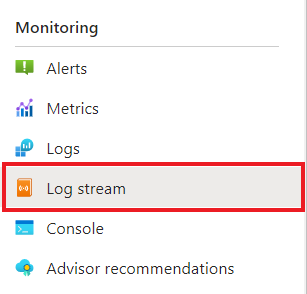
On the container app Overview page, select Monitoring > Log stream.
On the Log stream page, next to Container, select batch.
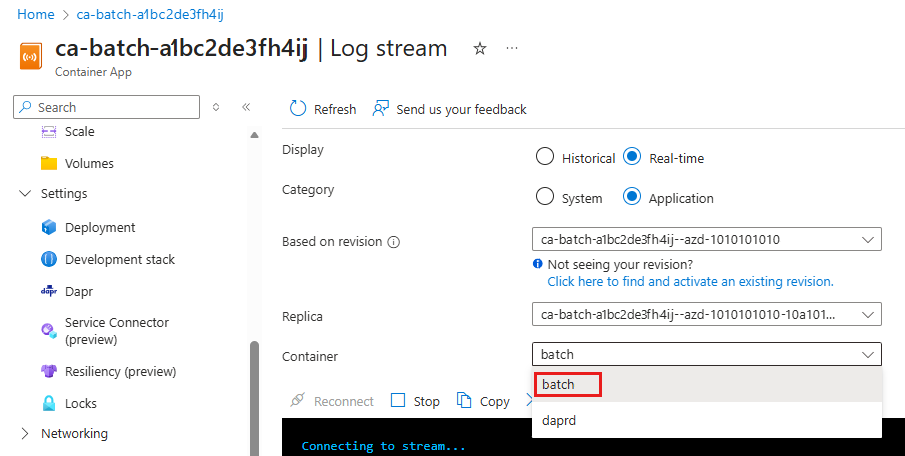
Confirm the container is logging the same output as in the terminal earlier.
Connecting to stream...
2025-12-09T15:49:43.31766  Connecting to the container 'batch'...
2025-12-09T15:49:43.33815  Successfully Connected to container: 'batch' [Revision: 'ca-batch-a1bc2de3fh4ij--azd-1010101010', Replica: 'ca-batch-a1bc2de3fh4ij--azd-1010101010-e3fh4ij5kl-6mn7o']
2025-12-09T15:49:25.003474294Z {"sql": "insert into orders (orderid, customer, price) values (1, 'John Smith', 100.32);"}
2025-12-09T15:49:25.004271468Z {"sql": "insert into orders (orderid, customer, price) values (2, 'Jane Bond', 15.4);"}
2025-12-09T15:49:25.004668724Z {"sql": "insert into orders (orderid, customer, price) values (3, 'Tony James', 35.56);"}
2025-12-09T15:49:25.005036659Z Finished processing batch
2025-12-09T15:49:35.003595579Z {"sql": "insert into orders (orderid, customer, price) values (1, 'John Smith', 100.32);"}
2025-12-09T15:49:35.004256349Z {"sql": "insert into orders (orderid, customer, price) values (2, 'Jane Bond', 15.4);"}
2025-12-09T15:49:35.004795603Z {"sql": "insert into orders (orderid, customer, price) values (3, 'Tony James', 35.56);"}
2025-12-09T15:49:35.005243829Z Finished processing batch
2025-12-09T15:49:45.003274969Z {"sql": "insert into orders (orderid, customer, price) values (1, 'John Smith', 100.32);"}
2025-12-09T15:49:45.003913458Z {"sql": "insert into orders (orderid, customer, price) values (2, 'Jane Bond', 15.4);"}
2025-12-09T15:49:45.004432789Z {"sql": "insert into orders (orderid, customer, price) values (3, 'Tony James', 35.56);"}
2025-12-09T15:49:45.004907028Z Finished processing batch
Understand azd up
When the azd up command runs successfully:
- The Azure Developer CLI creates the Azure resources referenced in the sample project ./infra directory in the Azure subscription you specify. You can find those resources in the Azure portal.
- The app is deployed to Container Apps. In the Azure portal, you can access the fully functional app.
Run the Python application locally
Prepare the project
Clone the sample application to your local machine.
git clone https://github.com/Azure-Samples/bindings-dapr-python-cron-postgres.gitGo to the sample root directory.
cd bindings-dapr-python-cron-postgres
Run the application by using the Dapr CLI
Before you deploy the application to Container Apps, take the steps in the following sections to run the PostgreSQL container and Python service locally with Docker Compose and Dapr.
From the sample root directory, go to the db directory.
cd dbRun the PostgreSQL container with Docker Compose.
docker compose up -dIn a new terminal window, go to the sample root directory, and then go to the batch directory.
cd bindings-dapr-python-cron-postgres/batchInstall the dependencies.
pip install -r requirements.txtRun the Python service application.
The dapr run command runs the binding application locally. When the application is running successfully, the terminal window shows the data from the output binding.
Expected output
The batch service listens to input-binding events from system cron jobs. In response to each event, the batch service uses the PostgreSQL output binding to insert data into a database.
== APP == Processing batch..
== APP == insert into orders (orderid, customer, price) values (1, 'John Smith', 100.32)
== APP == insert into orders (orderid, customer, price) values (2, 'Jane Bond', 15.4)
== APP == insert into orders (orderid, customer, price) values (3, 'Tony James', 35.56)
== APP == 127.0.0.1 - - [09/Dec/2025 11:19:42] "POST /cron HTTP/1.1" 200 -
== APP == Finished processing batch
== APP == Processing batch..
== APP == insert into orders (orderid, customer, price) values (1, 'John Smith', 100.32)
== APP == insert into orders (orderid, customer, price) values (2, 'Jane Bond', 15.4)
== APP == insert into orders (orderid, customer, price) values (3, 'Tony James', 35.56)
== APP == 127.0.0.1 - - [09/Dec/2025 11:19:52] "POST /cron HTTP/1.1" 200 -
== APP == Finished processing batch
== APP == Processing batch..
== APP == insert into orders (orderid, customer, price) values (1, 'John Smith', 100.32)
== APP == insert into orders (orderid, customer, price) values (2, 'Jane Bond', 15.4)
== APP == insert into orders (orderid, customer, price) values (3, 'Tony James', 35.56)
== APP == 127.0.0.1 - - [09/Dec/2025 11:20:02] "POST /cron HTTP/1.1" 200 -
== APP == Finished processing batch
Stop the database container
In the ./db terminal, stop the PostgreSQL container.
docker compose stop
Deploy the application template by using the Azure Developer CLI
To deploy the bindings application to Container Apps by using azd commands, take the steps in the following sections. The deployment replaces the local PostgreSQL container with an instance of Azure Database for PostgreSQL.
Prepare the project
Go to the sample root directory.
cd bindings-dapr-python-cron-postgres
Create and deploy by using the Azure Developer CLI
Run
azd initto initialize the project.azd initWhen prompted in the terminal, enter a unique environment name. The command uses this name as a prefix for the resource group that it creates to hold all Azure resources.
Run
azd upto prepare the infrastructure and deploy the application to Container Apps in a single command.azd upWhen prompted in the terminal, provide the following parameters.
Parameter Description Azure location The Azure location for your resources. Select a location where Azure Database for PostgreSQL is available. Azure subscription The Azure subscription for your resources. This process can take some time to run. While the
azd upcommand runs, the output displays an Azure portal link that you can use to monitor the deployment progress. The output also demonstrates howazd up:- Creates and configures all necessary Azure resources via the Bicep files in the ./infra directory by using
azd provision. After the Azure Developer CLI deploys these resources, you can use the Azure portal to access them. The files that are used to configure the Azure resources include:- main.parameters.json.
- main.bicep.
- An app resources directory organized by functionality.
- A core reference library that contains the Bicep modules used by the
azdtemplate.
- Deploys the code using
azd deploy.
- Creates and configures all necessary Azure resources via the Bicep files in the ./infra directory by using
Expected output
The azd init command displays output that's similar to the following lines:
Initializing an app to run on Azure (azd init)

? Enter a unique environment name: [? for help] <environment-name>

? Enter a unique environment name: <environment-name>

SUCCESS: Initialized environment <environment-name>.
The azd up command displays output that's similar to the following lines:
? Select an Azure Subscription to use:  3. <subscription-name> (aaaa0a0a-bb1b-cc2c-dd3d-eeeeee4e4e4e)
? Enter a value for the 'location' infrastructure parameter: 51. (US) China East 2  (chinaeast2)

Packaging services (azd package)

  (✓) Done: Packaging service api
  - Container: bindings-dapr-node-postgres-aca/api-<environment-name>:azd-deploy-1765297375

Provisioning Azure resources (azd provision)
Provisioning Azure resources can take some time.

Subscription: <subscription-name> (aaaa0a0a-bb1b-cc2c-dd3d-eeeeee4e4e4e)
Location: China East 2

  You can view detailed progress in the Azure portal:
  https://portal.azure.cn/#view/HubsExtension/DeploymentDetailsBlade/~/overview/id/%2Fsubscriptions%2Faaaa0a0a-bb1b-cc2c-dd3d-eeeeee4e4e4e%2Fproviders%2FMicrosoft.Resources%2Fdeployments%2F<environment-name>-1765297381

  (✓) Done: Resource group: rg-<environment-name> (2.56s)
  (✓) Done: Log Analytics workspace: log-a1bc2de3fh4ij (21.897s)
  (✓) Done: Application Insights: appi-a1bc2de3fh4ij (1.05s)
  (✓) Done: Portal dashboard: dash-a1bc2de3fh4ij (498ms)
  (✓) Done: Azure Database for PostgreSQL flexible server: a1bc2de3fh4ij-pg-server (4m2.986s)
  (✓) Done: Key Vault: kv-a1bc2de3fh4ij (26.377s)
  (✓) Done: Container Registry: cra1bc2de3fh4ij (21.53s)
  (✓) Done: Container Apps Environment: cae-a1bc2de3fh4ij (1m38.436s)
  (✓) Done: Container App: ca-batch-a1bc2de3fh4ij (18.094s)

Deploying services (azd deploy)

  (✓) Done: Deploying service api
  - Endpoint: https://ca-batch-a1bc2de3fh4ij.wonderfulocean-c2de3fh4.chinaeast2.azurecontainerapps.io/

SUCCESS: Your up workflow to provision and deploy to Azure completed in 8 minutes 57 seconds.
Confirm successful deployment
After deployment, the batch container app uses an output binding to insert data into Azure Database for PostgreSQL every 10 seconds. To check the logs for these insert operations, take the following steps.
In the terminal output, copy the container app name.
Sign in to the Azure portal, and then search for the container app resource by name.
On the container app Overview page, select Monitoring > Log stream.
On the Log stream page, next to Container, select batch.
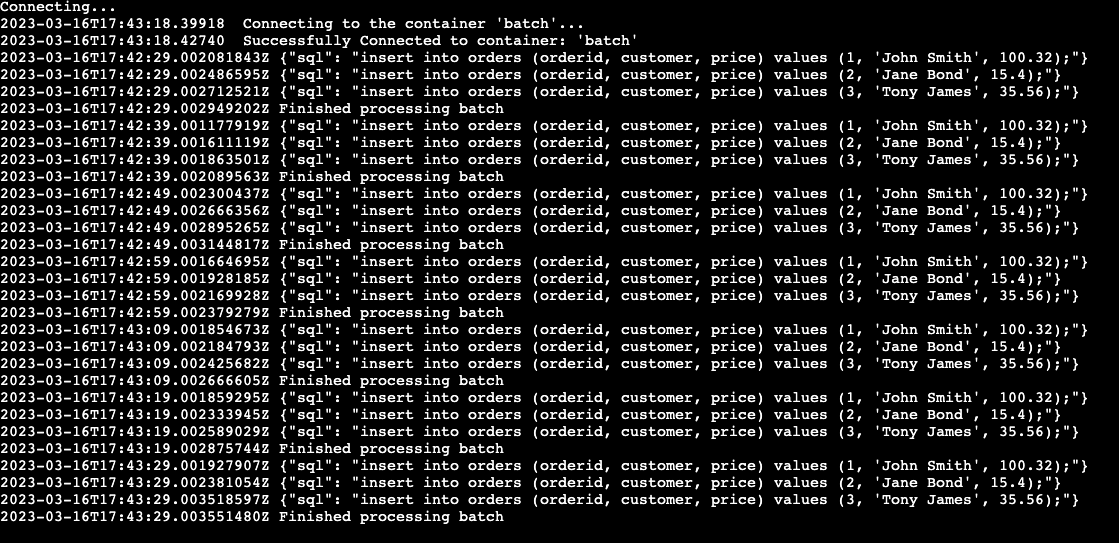
Confirm the container is logging the same output as in the terminal earlier.
Understand azd up
When the azd up command runs successfully:
- The Azure Developer CLI creates the Azure resources referenced in the sample project ./infra directory in the Azure subscription you specify. You can find those resources in the Azure portal.
- The app is deployed to Container Apps. In the Azure portal, you can access the fully functional app.
Run the .NET application locally
Prepare the project
Clone the sample application to your local machine.
git clone https://github.com/Azure-Samples/bindings-dapr-csharp-cron-postgres.gitGo to the sample root directory.
cd bindings-dapr-csharp-cron-postgres
Run the application by using the Dapr CLI
Before you deploy the application to Container Apps, take the steps in the following sections to run the PostgreSQL container and .NET service locally with Docker Compose and Dapr.
From the sample root directory, go to the db directory.
cd dbRun the PostgreSQL container with Docker Compose.
docker compose up -dIn a new terminal window, go to the sample root directory, and then go to the batch directory.
cd bindings-dapr-csharp-cron-postgres/batchInstall the dependencies.
dotnet buildRun the .NET service application.
dapr run --app-id batch-sdk --app-port 7002 --resources-path ../components -- dotnet runThe
dapr runcommand runs the binding application locally. When the application is running successfully, the terminal window shows the data from the output binding.
Expected output
The batch service listens to input-binding events from system cron jobs. In response to each event, the batch service uses the PostgreSQL output binding to insert data into a database.
== APP == Processing batch..
== APP == insert into orders (orderid, customer, price) values (1, 'John Smith', 100.32);
== APP == insert into orders (orderid, customer, price) values (2, 'Jane Bond', 15.4);
== APP == insert into orders (orderid, customer, price) values (3, 'Tony James', 35.56);
== APP == Finished processing batch
== APP == Processing batch..
== APP == insert into orders (orderid, customer, price) values (1, 'John Smith', 100.32);
== APP == insert into orders (orderid, customer, price) values (2, 'Jane Bond', 15.4);
== APP == insert into orders (orderid, customer, price) values (3, 'Tony James', 35.56);
== APP == Finished processing batch
== APP == Processing batch..
== APP == insert into orders (orderid, customer, price) values (1, 'John Smith', 100.32);
== APP == insert into orders (orderid, customer, price) values (2, 'Jane Bond', 15.4);
== APP == insert into orders (orderid, customer, price) values (3, 'Tony James', 35.56);
== APP == Finished processing batch
Stop the database container
In the ./db terminal, stop the PostgreSQL container.
docker compose stop
Deploy the application template by using the Azure Developer CLI
To deploy the bindings application to Container Apps by using azd commands, take the steps in the following sections. The deployment replaces the local PostgreSQL container with an instance of Azure Database for PostgreSQL.
Prepare the project
Go to the sample root directory.
cd bindings-dapr-csharp-cron-postgres
Create and deploy by using the Azure Developer CLI
Run
azd initto initialize the project.azd initWhen prompted in the terminal, enter a unique environment name. The command uses this name as a prefix for the resource group that it creates to hold all Azure resources.
Run
azd upto prepare the infrastructure and deploy the application to Container Apps in a single command.azd upWhen prompted in the terminal, provide the following parameters.
Parameter Description Azure location The Azure location for your resources. Select a location where Azure Database for PostgreSQL is available. Azure subscription The Azure subscription for your resources. This process can take some time to run. While the
azd upcommand runs, the output displays an Azure portal link that you can use to monitor the deployment progress. The output also demonstrates howazd up:- Creates and configures all necessary Azure resources via the Bicep files in the ./infra directory by using
azd provision. After the Azure Developer CLI deploys these resources, you can use the Azure portal to access them. The files that are used to configure the Azure resources include:- main.parameters.json.
- main.bicep.
- An app resources directory organized by functionality.
- A core reference library that contains the Bicep modules used by the
azdtemplate.
- Deploys the code using
azd deploy.
If this step causes error BCP420, go to your cloned repo, open the bindings-dapr-csharp-cron-postgres/infra/core/host/container-apps.bicep file, and replace line 28 with the following line:
scope: resourceGroup(!empty(containerRegistryResourceGroupName) ? containerRegistryResourceGroupName : resourceGroup().name)- Creates and configures all necessary Azure resources via the Bicep files in the ./infra directory by using
Expected output
The azd init command displays output that's similar to the following lines:
Initializing an app to run on Azure (azd init)

? Enter a unique environment name: [? for help] <environment-name>

? Enter a unique environment name: <environment-name>

SUCCESS: Initialized environment <environment-name>.
The azd up command displays output that's similar to the following lines:
? Select an Azure Subscription to use:  3. <subscription-name> (aaaa0a0a-bb1b-cc2c-dd3d-eeeeee4e4e4e)
? Enter a value for the 'location' infrastructure parameter: 51. (US) China East 2  (chinaeast2)

Packaging services (azd package)

  (✓) Done: Packaging service api
  - Container: bindings-dapr-csharp-postgres-aca/api-<environment-name>:azd-deploy-1765302322

Provisioning Azure resources (azd provision)
Provisioning Azure resources can take some time.

Subscription: <subscription-name> (aaaa0a0a-bb1b-cc2c-dd3d-eeeeee4e4e4e)
Location: China East 2

  You can view detailed progress in the Azure portal:
  https://portal.azure.cn/#view/HubsExtension/DeploymentDetailsBlade/~/overview/id/%2Fsubscriptions%2Faaaa0a0a-bb1b-cc2c-dd3d-eeeeee4e4e4e%2Fproviders%2FMicrosoft.Resources%2Fdeployments%2F<environment-name>-1765302329

  (✓) Done: Resource group: rg-<environment-name> (5.064s)
  (✓) Done: Log Analytics workspace: log-a1bc2de3fh4ij (23.618s)
  (✓) Done: Application Insights: appi-a1bc2de3fh4ij (1.046s)
  (✓) Done: Portal dashboard: dash-a1bc2de3fh4ij (1.734s)
  (✓) Done: Azure Database for PostgreSQL flexible server: a1bc2de3fh4ij-pg-server (5m3.165s)
  (✓) Done: Key Vault: kv-a1bc2de3fh4ij (18.652s)
  (✓) Done: Container Registry: cra1bc2de3fh4ij (17.922s)
  (✓) Done: Container Apps Environment: cae-a1bc2de3fh4ij (1m43.553s)
  (✓) Done: Container App: ca-batch-a1bc2de3fh4ij (28.457s)

Deploying services (azd deploy)

  (✓) Done: Deploying service api
  - Endpoint: https://ca-batch-a1bc2de3fh4ij.lemonstone-c2de3fh4.chinaeast2.azurecontainerapps.io/

SUCCESS: Your up workflow to provision and deploy to Azure completed in 10 minutes 48 seconds.
Confirm successful deployment
After deployment, the batch container app uses an output binding to insert data into Azure Database for PostgreSQL every 10 seconds. To check the logs for these insert operations, take the following steps.
In the terminal output, copy the container app name.
Sign in to the Azure portal, and then search for the container app resource by name.
On the container app Overview page, select Monitoring > Log stream.
Confirm the container is logging the same output as in the terminal earlier.
Connecting to stream...
2025-12-09T17:56:48.71008  Connecting to the container 'batch'...
2025-12-09T17:56:48.74569  Successfully Connected to container: 'batch' [Revision: 'ca-batch-a1bc2de3fh4ij--azd-1010101010', Replica: 'ca-batch-a1bc2de3fh4ij--azd-1010101010-e3fh4ij5kl-6mn7o']
2025-12-09T17:56:37.036094824Z Processing batch..
2025-12-09T17:56:37.260654837Z insert into orders (orderid, customer, price) values (1, 'John Smith', 100.32);
2025-12-09T17:56:37.266900768Z insert into orders (orderid, customer, price) values (2, 'Jane Bond', 15.4);
2025-12-09T17:56:37.271348202Z insert into orders (orderid, customer, price) values (3, 'Tony James', 35.56);
2025-12-09T17:56:37.274707749Z Finished processing batch
2025-12-09T17:56:47.002095902Z Processing batch..
2025-12-09T17:56:47.007495846Z insert into orders (orderid, customer, price) values (1, 'John Smith', 100.32);
2025-12-09T17:56:47.013275972Z insert into orders (orderid, customer, price) values (2, 'Jane Bond', 15.4);
2025-12-09T17:56:47.018779719Z insert into orders (orderid, customer, price) values (3, 'Tony James', 35.56);
2025-12-09T17:56:47.022543870Z Finished processing batch
2025-12-09T17:56:57.001690635Z Processing batch..
2025-12-09T17:56:57.005758247Z insert into orders (orderid, customer, price) values (1, 'John Smith', 100.32);
2025-12-09T17:56:57.011196545Z insert into orders (orderid, customer, price) values (2, 'Jane Bond', 15.4);
2025-12-09T17:56:57.017163911Z insert into orders (orderid, customer, price) values (3, 'Tony James', 35.56);
2025-12-09T17:56:57.020340292Z Finished processing batch
Understand azd up
When the azd up command runs successfully:
- The Azure Developer CLI creates the Azure resources referenced in the sample project ./infra directory in the Azure subscription you specify. You can find those resources in the Azure portal.
- The app is deployed to Container Apps. In the Azure portal, you can access the fully functional app.
Clean up resources
If you're not going to continue to use this application, run the following command to delete the Azure resources you created.
azd down
Related content
- For more information about deploying Dapr microservices to Container Apps, see Quickstart: Deploy a Dapr application to Azure Container Apps using the Azure CLI.
- For information about using a token to check that requests to your app come from Dapr, see Enable token authentication for Dapr requests.
- For information about making your applications compatible with
azd, see Create Azure Developer CLI templates overview.