用于.NET的 Application Insights Profiler 从正在运行的 ASP.NET Core 应用程序捕获性能跟踪,以显示哪些代码路径在负载下变慢。 当应用在容器中运行时,可以使用最少的代码更改来启用 Profiler,以查找并修复生产中的这些性能瓶颈。
本文介绍如何将 Profiler 添加到容器化 ASP.NET Core应用,将其连接到 Application Insights 资源,以及查看 Profiler 收集的跟踪。
在本文中,你将了解:
- 安装 NuGet 包并在项目中启用 Profiler。
- 在应用设置中设置 Application Insights 连接字符串。
- 生成并运行容器,然后查看.NET探查器跟踪。
先决条件
- Application Insights 资源。 记下连接字符串。
- Docker Desktop,用于生成 Docker 映像。
- 已安装 .NET 6 SDK。
设置示例项目并启用.NET探查器
克隆并使用以下示例项目:
git clone https://github.com/microsoft/ApplicationInsights-Profiler-AspNetCore.git转到容器应用示例:
cd ApplicationInsights-Profiler-AspNetCore

cd examples/EnableServiceProfilerForContainerAppNet6
运行以下 CLI 命令以创建此 barebones 示例项目:
dotnet new mvc -n EnableServiceProfilerForContainerAppControllers/WeatherForecastController.cs文件包含一个用于模拟瓶颈的延迟。[HttpGet(Name = "GetWeatherForecast")] public IEnumerable<WeatherForecast> Get() { SimulateDelay(); ... // Other existing code. } private void SimulateDelay() { // Delay for 500ms to 2s to simulate a bottleneck. Thread.Sleep((new Random()).Next(500, 2000)); }添加用于收集 .NET Profiler 跟踪的 NuGet 包:
dotnet add package Microsoft.ApplicationInsights.Profiler.AspNetCore启用 Application Insights 和 .NET Profiler。
在
builder.Services.AddApplicationInsightsTelemetry()中的builder.Services.AddServiceProfiler()方法后面添加WebApplication.CreateBuilder()和Program.cs:var builder = WebApplication.CreateBuilder(args); builder.Services.AddApplicationInsightsTelemetry(); // Add this line of code to enable Application Insights. builder.Services.AddServiceProfiler(); // Add this line of code to enable Profiler builder.Services.AddControllersWithViews(); var app = builder.Build();有关自定义设置,请参阅 “自定义 Application Insights Profiler”。
拉取最新的 ASP.NET Core 6.0 生成和运行时映像
转到 .NET Core 6.0 示例目录:
cd examples/EnableServiceProfilerForContainerAppNet6拉取最新的 ASP.NET Core 映像:
docker pull mcr.microsoft.com/dotnet/sdk:6.0
docker pull mcr.microsoft.com/dotnet/aspnet:6.0
提示
查找 .NET SDK 和 ASP.NET Core运行时的官方 Docker 映像。
添加 Application Insights 连接字符串
在 Azure 门户中,打开 Application Insights 资源。 在“概述”页面上,记下你的 Application Insights 连接字符串。
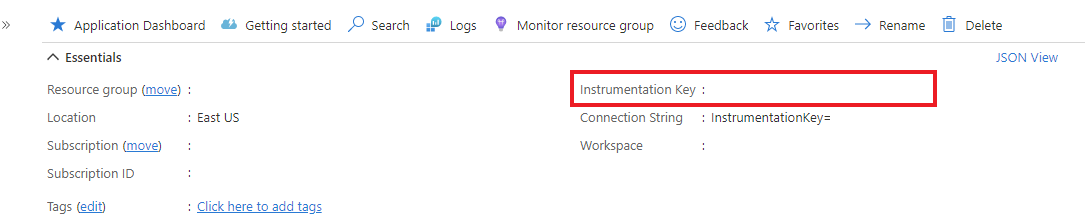
打开
appsettings.json并将您的 Application Insights 连接字符串添加到此代码部分:{ "ApplicationInsights": { "ConnectionString": "Your connection string" } }
生成并运行 Docker 映像
查看 Docker 文件。
生成示例映像:
docker build -t profilerapp .运行容器:
docker run -d -p 8080:80 --name testapp profilerapp
在浏览器中查看容器
若要访问示例应用的 weatherforecast 终结点,有两个选项:
在浏览器中,访问
http://localhost:8080/weatherforecast。使用
curl:curl http://localhost:8080/weatherforecast
检查性能分析会话的容器日志
(可选)检查本地日志,以查看.NET探查器会话是否已完成:
docker logs testapp
在本地日志中,请注意以下事件:
Starting application insights profiler with connection string: your-connection string # Double check the connection string
Service Profiler session started.               # Profiler started.
Finished calling trace uploader. Exit code: 0   # Uploader is called with exit code 0.
Service Profiler session finished.              # A profiling session is completed.
排查丢失的 .NET Profiler 跟踪问题
如果找不到应用中的跟踪,请考虑按照本 故障排除指南中的步骤操作。
查看 .NET Profiler 跟踪
等待两到五分钟,以便 Application Insights 可以聚合事件。
在 Azure 门户中,打开 Application Insights 资源。 在左侧菜单中,选择“ 调查>性能”。
跟踪过程完成后,将显示 “探查器跟踪 ”按钮。
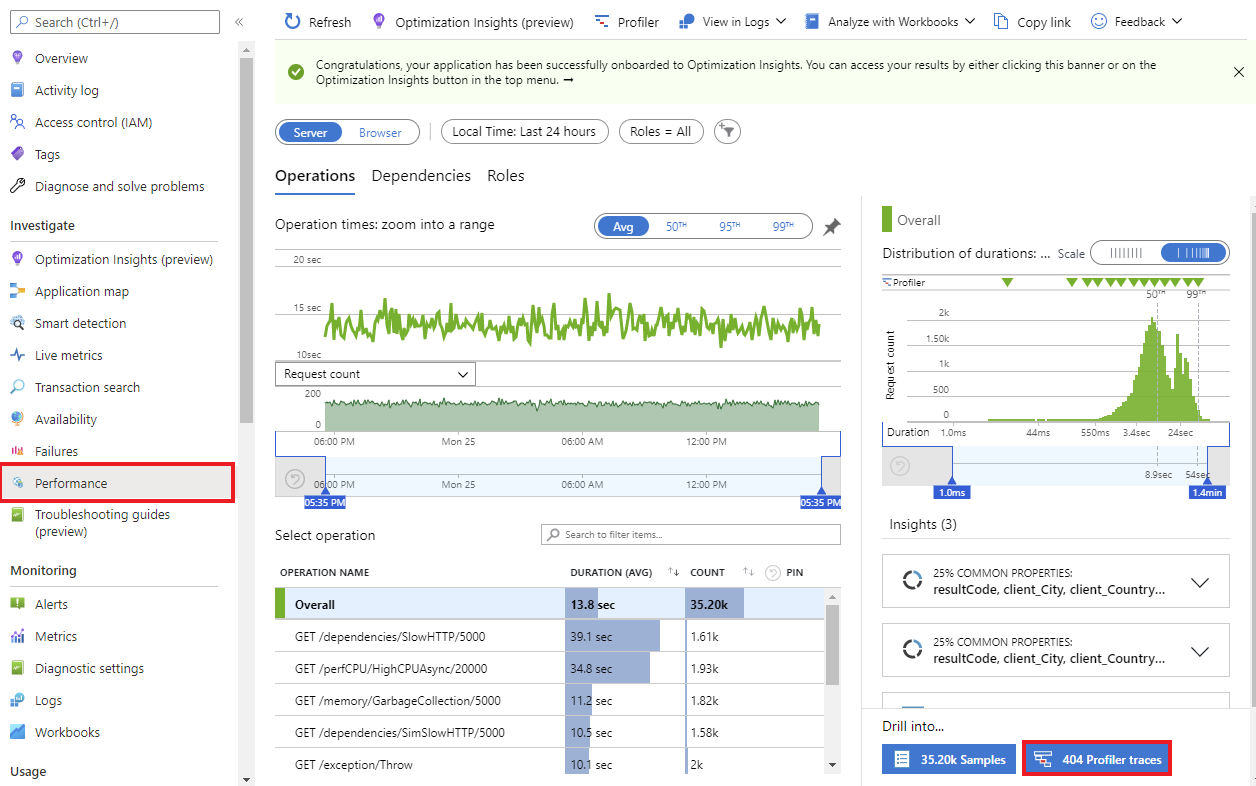
清理资源
运行以下命令停止示例项目:
docker rm -f testapp